

Usage and Storage Rules
Natural stone, wood, and bone/horns, as the name implies, are products of nature. Any variations in texture, color, veining, weight, and pattern are considered natural and not considered to be flawed. Furthermore, the designs are carved by hand. These variances are part of what makes each piece unique.
In the following text, we will point out specifics of the particular materials and provide you with the easiest guide to how to care for the specific item.
Our products are safe for food contact. Drinkings horn are treated with food-grade varnish from the inside. Wooden products are treated with food-grade oil.

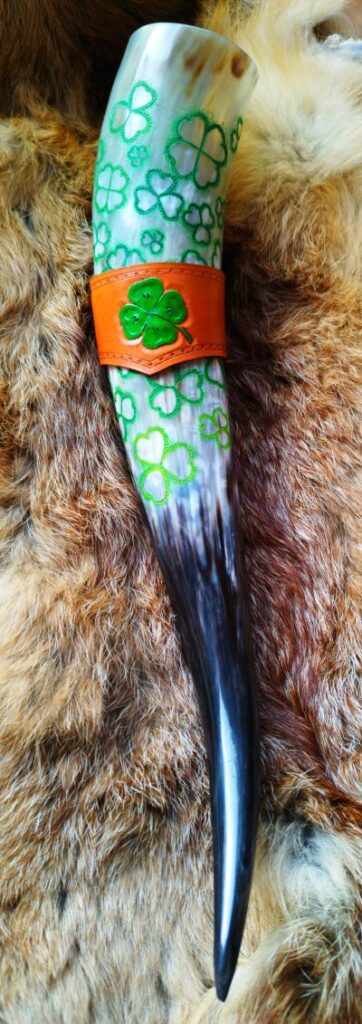
After buying a drinking horn
As previously mentioned, the horn has been a part of an animal and even though it has been cured, it can retain a faint smell of bone. In case of a horn with burned design, there can be also smell of burn. This smell will disappear after first several uses of the horn. The more you use it, the faster it will be gone 🙂
Anyway, you may want to give it a good rinse before first use.
Drinking horns are treated with food-grade varnish from the inside. Here is technical list of the product we use.
How to care for drinking horns
Use it to drink water, beer, cider or mead
Do not use it to drink spirits (high percentage of alcohol can damage the horn or varnish), aggressive and sour beverages (like coke or orange juice) and hot beverages (tea, coffee).
- After each use, clean your drinking horn in lukewarm running water without soap or other cleaning products. Dry it immediately. Never soak your horns in water for a longer period of time.
- Never use hot water.
- Never clean horns in a dishwasher.
- Do not allow your horn to sit for prolonged periods in fluids, e.g. jams, salads, or dressings (for the duration of the meal is fine)
- Occasionally, you can use warm water and soap to wash your horn, don’t scrub and rinse thoroughly (make sure to only use soap you’d use to wash dishes by hand).
- Avoid leaving the horn in direct sunlight or near heat sources.
- As yearly care for your horn, oil its exterior with an oil you don’t mind eating. Put a small bit on a cloth, and wipe the outside of the horn. After a minute or two, you’ll see the horn has soaked up everything it needs, you then wipe off all the excess and repeat next year. This helps to extend longevity of your horn.
How to care for leather products
We use mainly cow leather for our products. During the animal’s lifetime, the skin is kept nourished with continuously replenishing natural oils. Once an animal skin undergoes transformation into leather, we need to add those oils so the skin doesn´t crack. Flexibility can be retained by topping up with lubricating oils and waxes. You can use olive oil, leather balm (available in any shop with leather clothes/shoes) or any other product designed for leather care.
Using a clean, slightly damp cloth, gently wipe down your leather to remove any visible dirt so nothing gets caught in the leather pores.
Allow to air-dry. Do not dry using and external sources of heat like ovens of hair dryers.
Start with a small, fingernail sized amount of olive oil or leather balm on a clean, dry cloth. You can also you your hand to apply the oil or balm. Start with smaller amounts, you can always add more.
Test small amount on a hidden patch of leather to preview results. If everything look fine, you can start gently rubbing the oil into the leather using a circular motion.
The leather will start to absorb the oil or balm immediately. The appearance may initially darken, but over the next 24 hours, it will return to its natural state.
Repeat this procedure at least once a year, or more often if the item is exposed to heavy use. Additionally, always follow these rules:
Never wash leather in washing machine.
Never use chemical cleaning products on leather. Make sure all products are specially designed for leather care (except olive oil)
Store the leather in a dark, dry place. Avoid continuous exposure to direct sunlight as it dries the surface and makes it more prone to cracking.


How to care for wooden products
Wood is an organic material, and products made of wood will always be unique. Texture directions and knots are part of wood’s nature and charm, and no two pieces are alike. Wood reacts to sunlight and to changing of temperature or humidity, so it’s important to handle the wood products correctly.
Never use any soaps or cleansers on wooden products. These chemicals can destroy the wood´s texture.
Wood may expand and shrink with differences in temperature and humidity. Keep all wooden products at least one meter away from a direct source of heat (heaters, radiators, fireplaces etc.).
The wood will absorb or release moisture, depending on humidity in its surroundings. Excessive exposure to humidity can destroy the item. The wood expands in humid periods and contracts in dry periods. Repeated fluctuations can cause cracks and crack formations.
Direct exposure of wooden products to sunlight may lead to loss of the original color and to get deformations.
Remove spilled liquids from wooden surfaces as soon as possible.
Cleaning is carried out with a clean, dry, lint-free cloth from cotton or another material. We do not recommend microfiber cloths. Alternatively, the cleaning is carried out with a clean, damp cloth with water, then drying it with a clean lint-free cloth.
Our products are always treated by food-grade oil. During day-to-day use, the oil layer gets wiped off or absorbed by the wood. In order to maintain the original color, oil should be reapplied at least once a year.
We recommend using linseed oil, but you may use any commercial wood oil finishes. Just make sure you read the instructions on the product.
Regarding wooden candle holders, always put the candles out once they burn down to one inch (except tealight and other candles in metal or plastic cup). And NEVER leave lit candles unattended!
Wooden products are treated with food-grade oil. Here is technical list of the product we use.